

ORCHESTRATION!!!
oops all zelda music (and ravel ig)

Our job as composers, especially for those of us that work with visual media, is to tell a story. There are lots of things that we can do to really get our point across, like creating leitmotifs to represent certain themes or characters (see: Toby Fox).
Melodic motifs are a fantastic way to craft a musical narrative but it’s not the only option that we have. I may be a little biased as someone who has a background as an orchestral violinist/violist, but I feel that a well-orchestrated soundtrack can do a LOT to elevate a game’s story.
Note that when I say “orchestration”, I am referring to both the act of choosing what instruments will play what part (and what that can represent) AND knowing how to write for them in a way that actually makes sense.

PILLARS OF ORCHESTRAL WRITING
What do I consider to be three of the most important concepts when writing for orchestra? Texture, variation, and a deep understanding of each instrument family & the instruments that belong to it. Let’s start with texture.
TEXTURE
FOREGROUND, MIDDLEGROUND, AND BACKGROUND
Before we get into types of musical textures, I want to discuss the three layers that you’ll often see in orchestral music: Foreground, middleground, and background.
The foreground is the easiest to identify. It’s usually the main melody. The background is there to support the foreground in the form of a bassline, a groove, or something else that isn’t necessarily the main focus.
Middleground stuff tends to be harder to pick out, especially to an untrained ear. These are usually countermelodies, harmonic figures, flourishes, and other things of that nature. This layer adds depth and character to the music.
Take a listen to this unused arrangement of the Lost Woods theme from The Legend of Zelda: The Minish Cap. Can you identify the foreground, middleground, and background in this tune?
TEXTURES
There are lots of things that your orchestra can do across all three of those layers. This is where the concept of texture comes in. There are four main categories that I tend to organize them under.
MONOPHONIC: solo line, chorale vibes, unisons (+ 8ves), parallel motion, etc
POLYPHONIC: counterpoint, both imitative & non-imitative
OSTINATO: a short phrase that persistently repeats in the same musical voice. sometimes it’s on the same pitch, sometimes it’s not.
OTHER COOL STUFF: anything that doesn’t necessarily fall under the first three categories.
All of this is to say: please don’t make your orchestra play whole notes for ten minutes straight, we would be very sad
EXAMPLE: MONOPHONIC TEXTURE
Ruins from The Legend of Zelda: Breath of the Wild
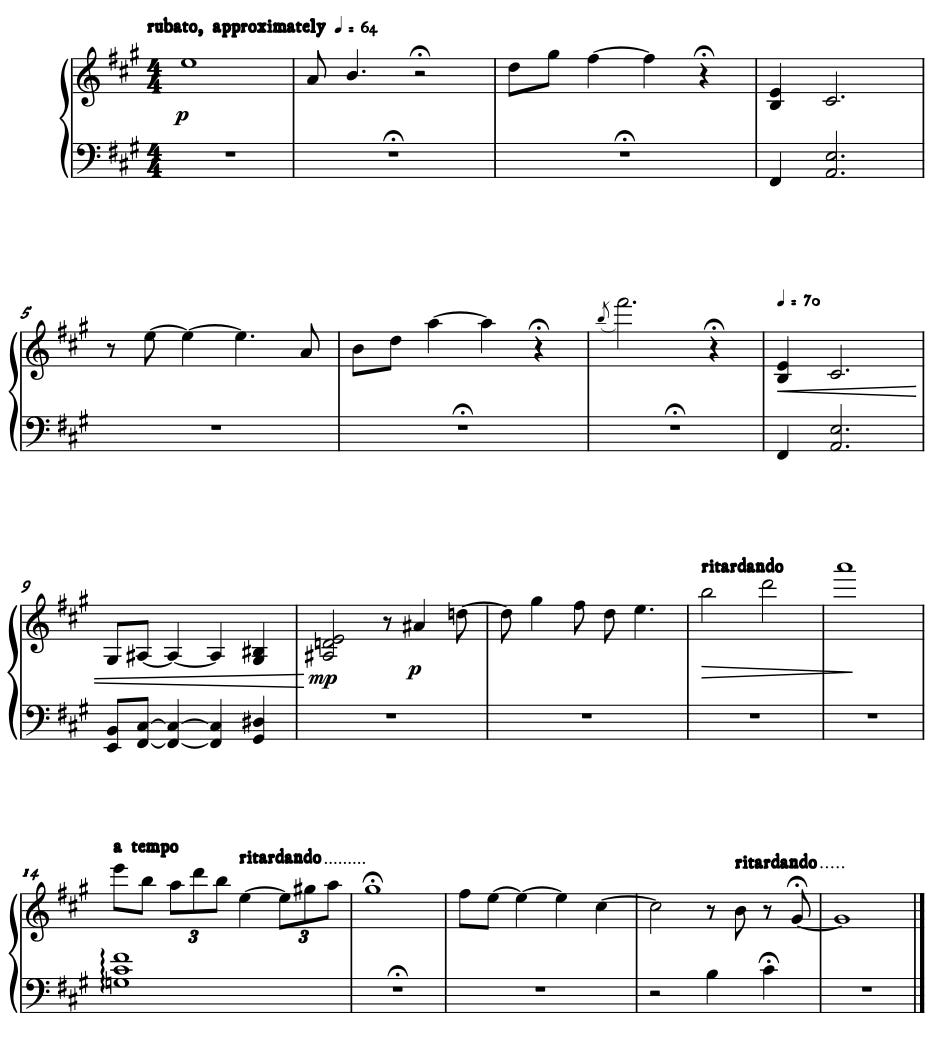
This is an example of solo texture & parallelism.
EXAMPLE: POLYPHONIC TEXTURE
Gloom Spawn from The Legend of Zelda: Tears of the Kingdom
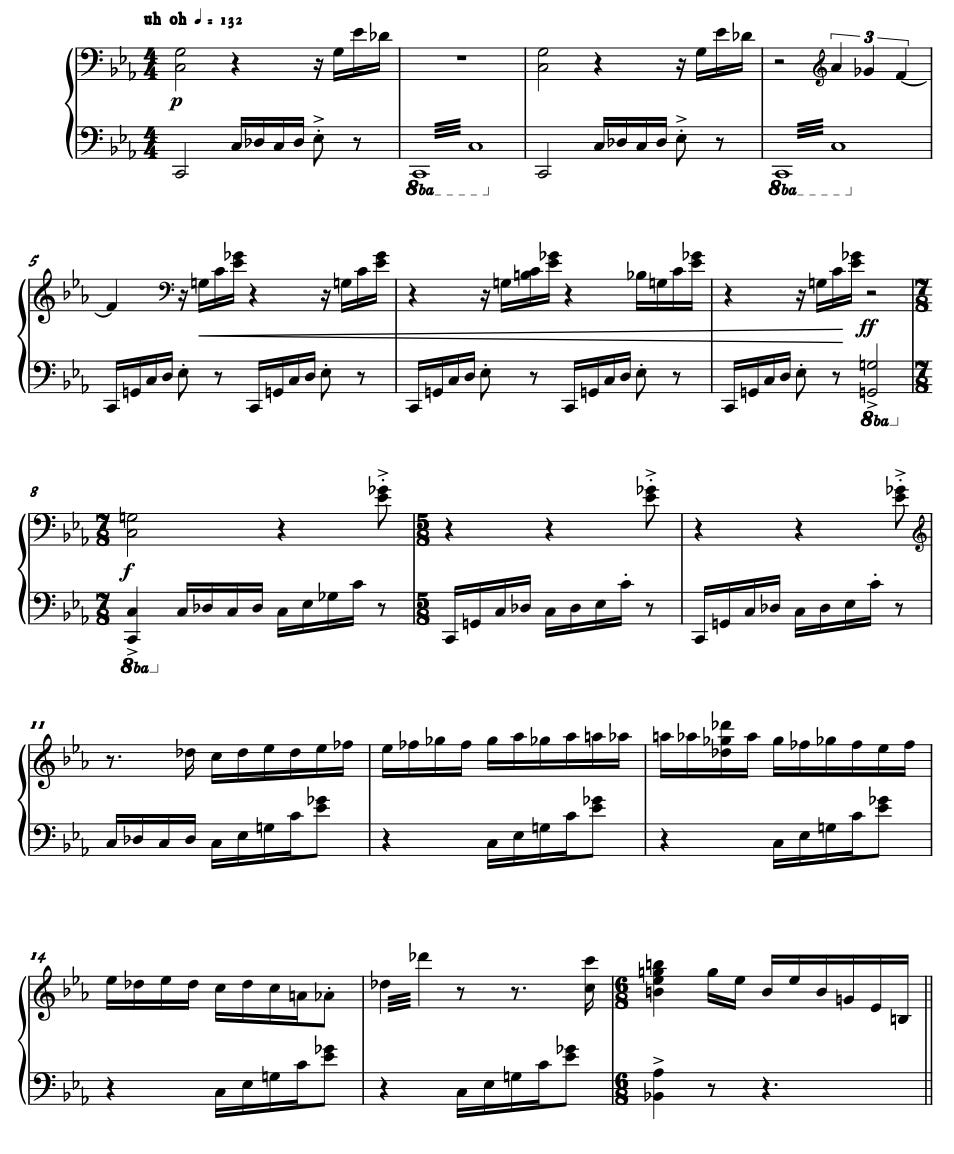
This is an example of non-imitative counterpoint.
EXAMPLES: OSTINATO
I have two examples for this category!
Eldin Temple from The Legend of Zelda: Echoes of Wisdom
Bolero, Maurice Ravel
VARIATION
Now that we’ve got a solid (or semi-solid) understanding of texture, we should talk about variation. Once you’ve finished a phrase, you should try to consider switching things up in the orchestration. Here are a few options!
Switch up the range the ensemble is playing in! Extreme ranges can be really fun to experiment with, especially if it makes sense in the story.
Swap out sections. i.e., double reeds passing the melody onto the horns.
Just had a full ensemble moment? Now might be the time to feature a smaller section… or even a soloist
Now I hope you’re in the mood to listen to some more Ravel!
EXAMPLES: VARIATION
These cover all three of the things I mentioned in the last section. And yes, this is concert music, but that doesn’t mean that you can’t do the same thing in video game scores! Or other types of music entirely. Anyway, these are our examples:
La Valse, Maurice Ravel
Daphnis et Chloe Suite No. 2, Maurice Ravel
UNDERSTANDING THE INSTRUMENTS
Understanding the instruments of the standard symphony orchestra is something that I strongly encourage all composers to work towards. You can have as many cool ideas as you want but if you put the violin outside of its range, you are going to have a problem.
You should be familiar with…
Instrument transcriptions
clarinets, horns in F, contrabass, etc.
Ranges & special considerations for each register
i.e. flutes in their lowest register will not project over a full symphony at it’s strongest dynamic.
Playing techniques
this also includes extended techniques, please don’t throw tomatoes at me i SWEAR these are cool
Don’t treat a live ensemble like a MIDI keyboard. You’ll get more color out of the orchestra if you’re writing idiomatic parts (or parts that are intentionally non-idiomatic, but that’s another conversation for another day).
EXAMPLES: IDIOMATIC VIOLIN WRITING
Here are two examples of really well-written violin solo parts from The Legend of Zelda: Triforce Heroes. Raise your hand if you actually played this game. Just me? Damn.
REMEMBER: THERE ISN’T A SET “RIGHT” OR “WRONG” WAY TO WRITE FOR ORCHESTRA.
COMPOSING FOR A RECORDING SESSION
That being said, there are some things that you should keep in mind if you’re going to compose orchestral music for a studio recording session.
Odds are, the musicians in those seats have never seen your music before. If they’re there, then they’re definitely fantastic musicians! And they will sound phenomenal! But as the composer, you should try to make their lives easier, not harder.
Here’s some general advice…
If you’re going to give the live musicians a difficult line, double it with something in the backing track.
Simple parts can come together to create some KICKASS lines. Don’t overcomplicate it!
Clarity is key! You can never have too many articulations, dynamics, etc.
Where should we draw the line, though? Is there such a thing as too easy? (Yes. there is. Do not make your musicians commute all the way to the studio just to play a single whole note tremolo)
WHOAA IT’S A SCORE PREPARATION TANGENT
If you want your session to be successful, PLEASE make sure that your scores & parts are clear. The more questions your musicians have to ask you, the more time you’ll waste. And every second counts when you’re on the podium.
What’s the problem with this excerpt?
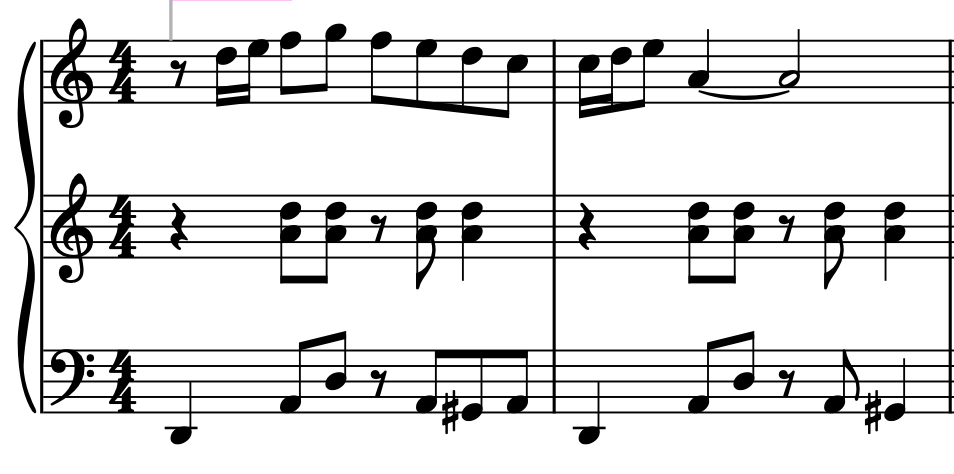
There are no dynamics and articulations! You’d have to stop the session to ask your musicians to write them in by hand. And that’s no good!
What’s the problem with this excerpt?
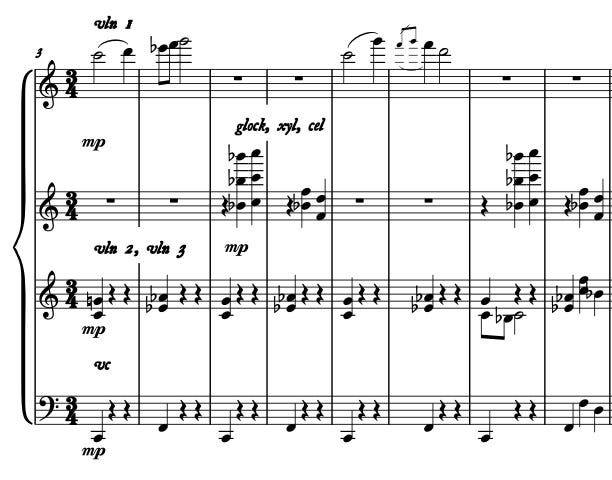
If you guessed that the spacing is the problem, you’d be correct. This is genuinely hard to read, which would end up slowing your session down as well.
A few other things to consider.
Check for missing information (dynamics, tempo, meter, etc) in your parts.
Check for mislabeled cues.
Please make sure that you don’t write outside of an instrument’s natural range.
Make sure you don’t have any missing measures.
I am speaking from experience as someone who has played violin & viola in a number of short films. The music could be great but if the score is a mess, the session will be full of stress. That’s it for the score prep tangent, back to orchestration.
THE ORCHESTRA AS A NARRATIVE DEVICE
We all know and love melodic motifs in our game scores, but have we stopped to consider orchestrational motifs?
Just like a melody, this happens when a particular character, setting, theme, or general concept is represented by an instrument, instrument section, or some type of characteristic “sound”.
There’s one specific example of this that I absolutely love in The Legend of Zelda: Tears of the Kingdom. If you know me, you probably know what I’m about to show you.
EXAMPLE: TEARS OF THE KINGDOM
Here’s the Prologue theme from The Legend of Zelda: Tears of the Kingdom. Pay attention to the eighth note line that you will hear.
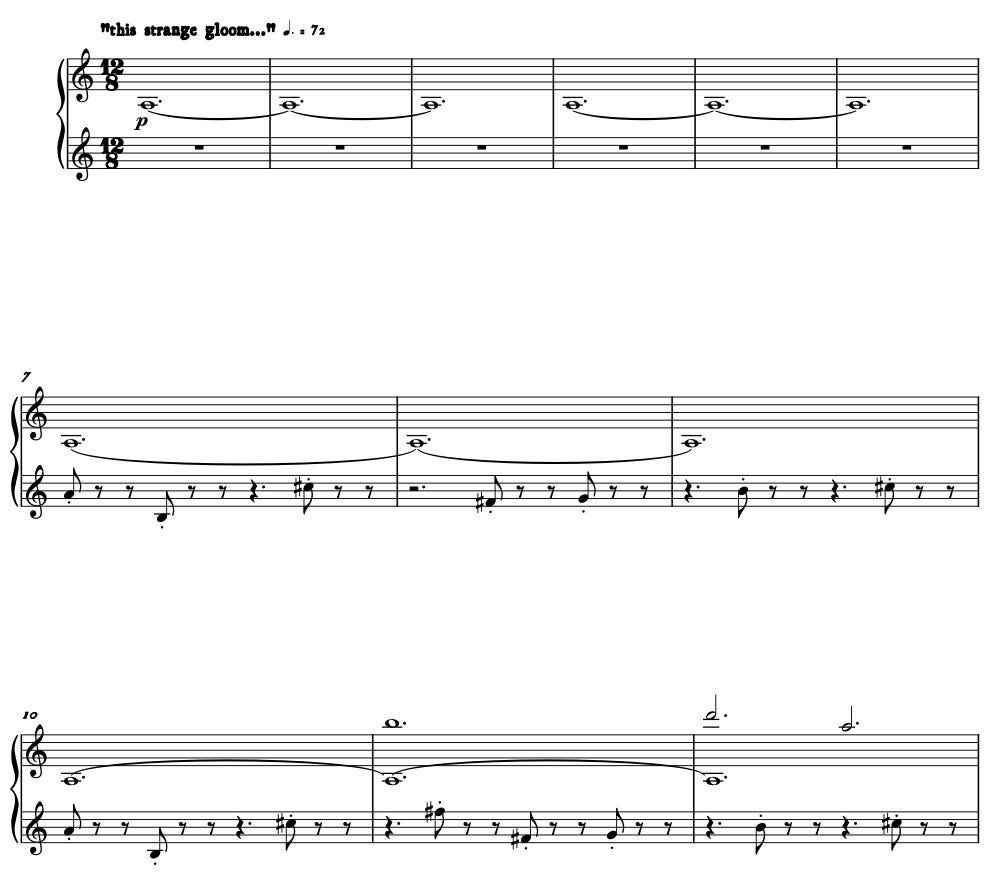
That same vocal sample returns in every single end-of-dungeon boss theme that we hear in this game. The processed voice becomes something of a motif for The Demon King. Or evil as a whole, if you will. Here are the boss themes for Colgera, Mucktorok, Queen Gibdo, and Marbled Gohma. Try to pick out that line!
You might have noticed that the motif doesn’t come back exactly in the same way that we heard it in the prologue. That’s because they’ve been saving it for the lead-up to the final boss sequence. Spoiler warning if you haven’t finished this game yet!
Gloom’s Lair is such a fantastic piece of game audio and I WISH that I had more time to just ramble about it (and the way that it was implemented into the game). Not only do we get the same processed voice that we heard in the opening sequence, but it’s expanded on hugely. We get a choir! And it’s the same line that we heard in the beginning! This is such a killer full-circle moment.
side note: this book is cool
If you’re ever in need of a refresher on what an instrument’s playable range is, what they sound like in any given register, playing techniques, or anything else… this thing is very cool and not expensive.
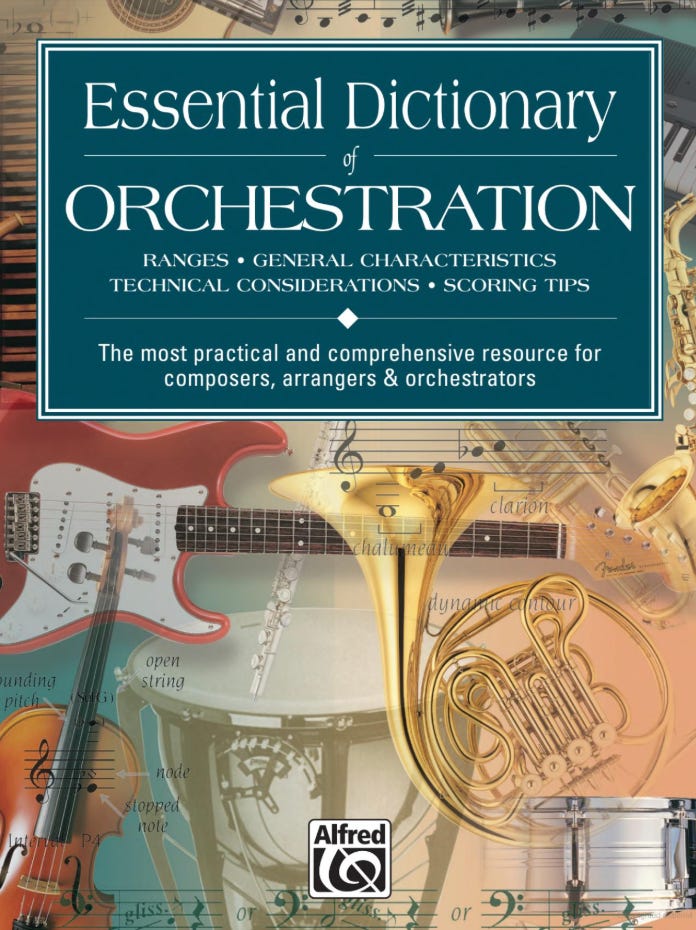
Essential Dictionary of Orchestration: The Most Practical and Comprehensive Resource for Composers, Arrangers and Orchestrators
It’s got sections on orchestral instruments and a few non-orchestral ones like harmonica & guitar. Retails for about $5 online if you’re looking in the right places.
That’s all I’ve got for you today! Thank you for reading!! Yay!!
if you saw me present this at the Video Game Music Club meeting in spring 2025, no you didn’t